
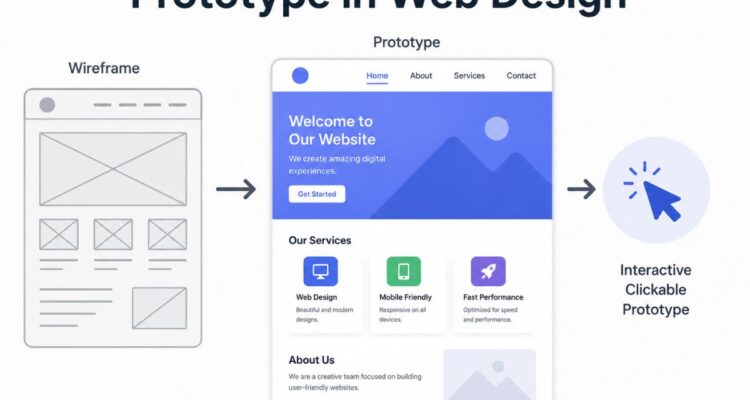
A Prototype in Web Design is an early working model of a website. It helps designers show how pages will look and how users will move through them before development starts. Unlike a simple Website Wireframe, a prototype may include clickable buttons, menus, links, forms, and other active elements. It allows clients and team members to understand the website idea before spending time and money on coding.
A Prototype in Web Design is a visual sample that shows the planned structure and functions of a website. It may be simple or highly detailed, depending on the project stage. Designers use it to turn a basic Web Design Concept into something that people can view, explore, and test.
A prototype does not always contain the final colours, images, or written content. Its main purpose is to explain how the website will work. Through Website Layout Planning, designers can decide where to place the header, navigation menu, buttons, forms, images, and important page sections.
A Website Wireframe is a basic outline of a web page. It normally uses boxes, lines, and simple text to show where different elements will appear. It focuses on page structure rather than visual design or user interaction.
A Prototype in Web Design goes one step further by adding actions and movement. Users may click buttons, open menus, move between pages, or test forms. An Interactive Web Mockup gives a more realistic idea of the final website and helps people understand the complete user journey.
UI UX Prototyping helps designers create websites that are simple, attractive, and easy to use. UI means user interface, which includes colours, buttons, menus, and page elements. UX means user experience, which focuses on how users feel when they visit and use the website.
A Prototype in Web Design allows the team to check both UI and UX before the website is developed. Through User Interface Testing, designers can discover confusing buttons, unclear menus, missing information, and difficult navigation. These issues can then be corrected at an early stage.
An Interactive Web Mockup looks similar to a real website but may not have a complete working system behind it. It connects different page screens and allows users to test common actions. For example, they can click a “Contact Us” button, open a service page, or move through an online checkout process.
The Prototype in Web Design should focus on the most important user actions. Designers do not need to make every feature fully functional. They only need to show enough interaction to explain the Web Design Concept and confirm that the planned user journey is clear.
A Clickable Website Demo is useful when presenting a design to clients, developers, managers, or investors. Instead of explaining every page through long descriptions, designers can let people click through the website model themselves. This makes the idea easier to understand.
A Prototype in Web Design also helps clients give more useful feedback. They can point out which sections are unclear, which buttons are difficult to find, or which pages need changes. The Clickable Website Demo reduces misunderstandings because everyone can see how the website is expected to work.
A modern website should work correctly on desktop computers, laptops, tablets, and mobile phones. A Responsive Design Prototype shows how the website will adjust to different screen sizes. It helps designers check whether text, images, buttons, and menus remain easy to use.
The Prototype in Web Design should include important mobile screens because many people in Pakistan access websites through smartphones. A Responsive Design Prototype can show how a wide desktop menu changes into a mobile menu and how page sections move into a vertical layout on smaller screens.
Website Layout Planning helps the design team organize content before coding begins. Designers decide which information should appear first, where call-to-action buttons should be placed, and how users will reach important pages. Good planning keeps the website clean and prevents overcrowded sections.
A Prototype in Web Design makes the planned layout easier to review. Designers can check whether each page has a clear purpose and whether the content follows a logical order. A well-planned Website Wireframe can first create the basic structure, while the prototype adds interaction and visual details.
User Interface Testing involves asking real users or team members to complete tasks through the prototype. They may be asked to find a product, submit a form, book a service, or contact the business. Designers watch how easily users complete each action.
A Prototype in Web Design can reveal problems that may not be clear to the designer. For example, users may ignore an important button because its position is unclear. They may also become confused by the menu. UI UX Prototyping allows these issues to be fixed before they affect the final website.
The process often starts with research and a simple Web Design Concept. The designer learns about the business, target audience, website goals, and required features. This information helps the team decide what pages and functions the website needs.
The next stage is creating a Website Wireframe to organize the basic page structure. After approval, the designer adds visual elements and connections between screens. The result becomes a Clickable Website Demo that can be tested and improved.
The final stage includes feedback and updates. The designer reviews the Interactive Web Mockup with the client and target users. Necessary changes are made before the project is handed over to the development team for coding.
A Prototype in Web Design can save time because major problems are found before development begins. Changing a prototype is usually faster and less expensive than changing a fully coded website. It also gives designers and developers a clear direction for the project.
Another benefit is better teamwork. The Responsive Design Prototype provides one shared visual guide for writers, designers, developers, and clients. Everyone can understand the planned website structure, features, and user flow without depending only on written instructions.
One common mistake is adding too much detail too early. Designers may spend time perfecting colours and images before confirming the page structure. Starting with Website Layout Planning helps the team focus on usability before visual decoration.
Another mistake is creating a prototype without testing it. A beautiful design may still be difficult to use. Regular User Interface Testing is necessary to confirm that visitors can find information and complete important actions without confusion.
A website Prototype in Web Design should be used when a project has several pages, custom features, or a detailed user journey. It is especially useful for online stores, booking platforms, education websites, business portals, and service websites. UI UX Prototyping can help organize these complex projects.
A prototype is also helpful when several people must approve the design. An Interactive Web Mockup allows business owners and team members to review the same model and provide feedback before development starts.
No. A prototype is an early model used to test ideas and interactions. A Clickable Website Demo may look like a real website, but it may not include a working database, payment system, or complete backend features.
A Website Wireframe helps designers organize the basic page structure before adding colours, images, and clickable actions. It keeps the early design process simple and focused on content placement.
Yes. A Responsive Design Prototype can include separate layouts for desktop, tablet, and mobile devices. It helps designers ensure that the website remains clear and easy to use on different screen sizes.
Clients, team members, developers, and target users can take part in User Interface Testing. Feedback from people who may use the final website is especially helpful because they can identify real usability problems.
Yes. Finding and fixing problems during Website Layout Planning is usually cheaper than changing a completed website. A clear prototype also reduces confusion and unnecessary development work.
Designers use different tools to create a Web Design Concept, connect screens, and build clickable interactions. The best tool depends on the project size, required detail, team needs, and testing process.
At MansooriFiberglass, Prototype in Web Design helps turn a website idea into a clear and testable model. It connects planning, design, interaction, and user feedback before coding begins. By using a Website Wireframe, UI UX Prototyping, and a Responsive Design Prototype, businesses can create websites that are easier to understand, use, and develop. A strong Prototype in Web Design reduces mistakes and provides a clear path toward a successful final website.
